Abstract:Forex trading is an activity that requires a high level of rationality and composure. However, our psychological factors often influence our trading decisions and may lead us to fall into some inescapable psychological traps. These traps not only result in trading losses but also damage our trading confidence and enjoyment. So, have you ever fallen into these "tricks"? Let's take a closer look together.
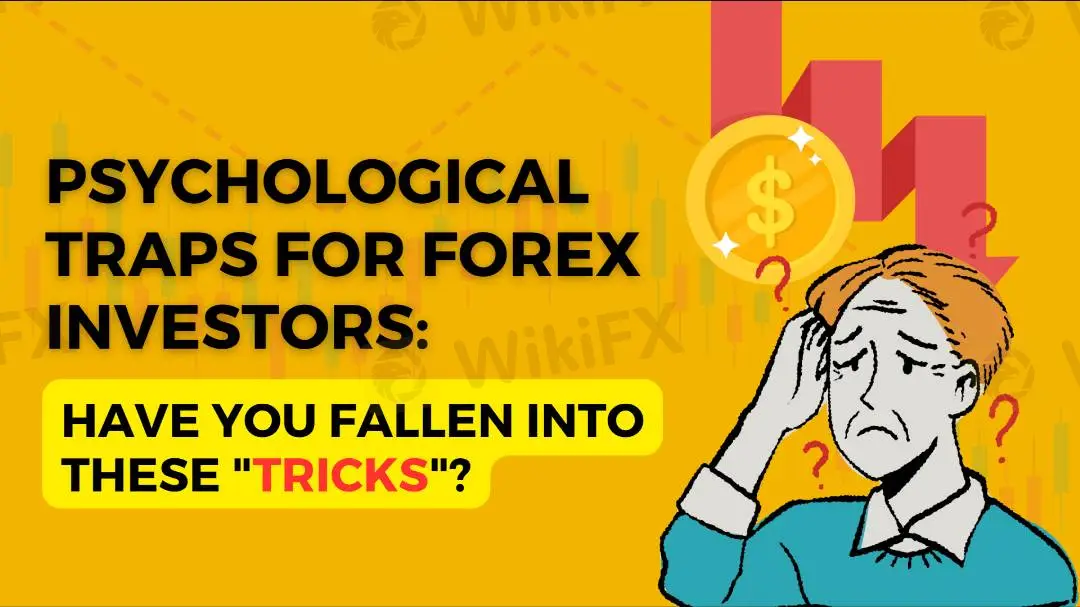
Forex trading is an activity that requires a high level of rationality and composure. However, our psychological factors often influence our trading decisions and may lead us to fall into some inescapable psychological traps. These traps not only result in trading losses but also damage our trading confidence and enjoyment. So, have you ever fallen into these “tricks”? Let's take a closer look together.
 Contents
Confirmation bias

Confirmation bias refers to our tendency to seek and accept information that aligns with our existing views and expectations while ignoring or rejecting information that contradicts or is inconsistent with them. In forex trading, confirmation bias can lead us to blindly believe that our judgments are correct and make us reluctant to objectively analyze market changes and risks. For example, when we take a long position on a currency pair, we tend to focus on factors that support an increase in exchange rates while neglecting those that could lead to a decline. When there are signs of a market reversal, we are unwilling to admit our mistakes and instead continue to hold our views, sometimes even increasing our position, which often results in larger losses.
How can we avoid confirmation bias? First, we need to be aware of the possibility of this bias and avoid being overly confident or stubborn. Second, we should strive to gather and analyze information from various sources and perspectives, not just what we want to see. Finally, it's important to set reasonable stop-loss and take-profit levels and not let our emotions interfere with our trading plans.
Gambler's Fallacy

The gambler's fallacy refers to the mistaken belief that if something happens more frequently or less frequently than normal within a certain period of time, its frequency will correspondingly decrease or increase in the future. In forex trading, the gambler's fallacy can lead us to inaccurately assess the probabilities and patterns of the market, resulting in erroneous trading decisions. For example, after experiencing several consecutive losses, we may mistakenly believe that the probability of winning in the next trade is higher, leading us to increase our position size or take risky entries. Conversely, after several consecutive profitable trades, we may mistakenly believe that the probability of losing in the next trade is higher, causing us to decrease our position size or miss out on opportunities.
Loss Aversion

Loss aversion refers to the tendency to dislike losses more than we like equivalent gains. In forex trading, loss aversion can lead us to exhibit avoidance and procrastination behaviors when faced with losses, and hasty and conservative behaviors when faced with profits. For example, when our trades incur losses, we may be unwilling to admit our mistakes and hope for a market turnaround, resulting in a failure to implement timely stop losses or close positions. Conversely, when our trades generate profits, we may fear a market reversal and prematurely take profits or close positions.
To avoid loss aversion, it is important to recognize that losses are an inevitable part of trading and not perceive them as personal failures or humiliation. We should objectively evaluate our trade outcomes and not let our emotions sway us. Finally, we should stick to our trading plans and strategies, avoiding deviations based on greed or fear, and remaining committed to our goals and principles.
Herd Mentality

Herd mentality refers to the tendency to follow the opinions or behaviors of the majority, rather than relying on our own judgment or beliefs. In forex trading, herd mentality can influence us to align with popular views or trends in the market, disregarding our own analysis and judgment. For example, when the majority in the market is bullish on a particular currency pair, we may also join the bandwagon without considering whether the market is already overbought or due for a reversal. Conversely, when the majority is bearish on a currency pair, we may also follow suit without considering whether the market is already oversold or poised for a rebound.
To avoid herd mentality, it is important to have independent thinking and judgment, not blindly believing or following others' opinions or actions. We should have clear trading goals and strategies, not randomly changing or abandoning our plans. Finally, we should have appropriate timing and methods for our trades, not simply going with the crowd or trading against the trend.

Before engaging in trading, it is crucial to conduct a preliminary assessment of the broker by searching for their reviews on WikiFX to determine whether it is a blacklisted platform.
Looking to invest in US stocks, forex, or futures but concerned about scams? Find the most comprehensive information on securities brokers right here.
Before making any deposits, make sure to download the anti-fraud app, WikiFX APP, to safeguard your funds in the financial market.