Abstract:If the U.S. Federal Reserve killed off forward guidance in June, the European Central Bank may have just hammered the final nail in the coffin of a tool officials had long used to provide monetary policy signals to financial markets.
The ECB delivered a half-percentage-point rate hike on Thursday, double what it flagged in June when setting out its policy-tightening plans. It had appeared to change tack earlier this week, when sources told Reuters a bigger rate hike was now under consideration.
The switch to what the ECB itself described as “a meeting-by-meeting approach” is the latest warning to investors and traders who have watched policymakers from Australia to Switzerland to Sweden execute startling U-turns on policy signals they had sent only weeks earlier.
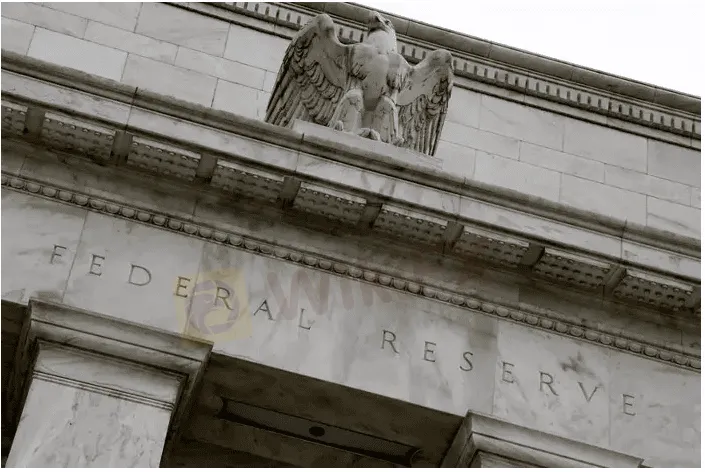
The clearest sign that the game was up for forward guidance came perhaps in June when the U.S. central bank raised its overnight benchmark interest rate by 75 basis points, barely a month after Fed Chair Jerome Powell ruled out such a big move.
“Its dead in the water,” said Peter Kinsella, global head of FX strategy at asset manager UBP, who noted that he had taken “zero account” of forward guidance for months.
“It was a tool central banks used when inflation was very low, basically to say ‘we will keep rates low for a long time’ to encourage consumers to keep spending.”
But inflation is back with a vengeance, having surged to an annualised rate of 8.6% in the euro zone in June on the back of explosive energy and food prices. The data rendered obsolete the ECBs pledge to kick off rate hikes with a modest move.
That picture is mirrored across the developed world.
The Feds change of heart came less than a week after a big May inflation print showed inflation had not peaked.
And between the Fed and ECB, came the Bank of Canadas surprise full-percentage-point rate increase on July 13. After two prior 50-basis-point moves, the governor of the Canadian central bank had hinted at more “forceful” action but not prepared markets for the extent of the hike.
ECB President Christine Lagarde said on Thursday her central bank had opted to disregard its previous signal for a bigger rate hike, given “several indicators that constituted a change from the June meeting,” especially the “materialisation of inflation risks.”
The biggest benefit of forward guidance was to enable policymakers to reassure banks they could continue passing lower long-term interest rates to mortgage and business clients, boosting economic growth.
It also offered the ECB and others a way to fight deflation, by encouraging more borrowing and spending.
But under changed circumstances, it can backfire, said Gareth Hill, a portfolio manager at Royal London Asset Management who admitted being puzzled that the ECB had “boxed” itself into a 25-basis-point rate hike six weeks in advance.
“As data comes out in the course of that period between the start of guidance and the actual time to deliver those hikes … and speculation starts to come in, that can increase volatility in itself,” Hill added.
That was evident this week, with the euro roaring off 20-year lows against the U.S. dollar, and German long-dated bond yields up 12 basis points on Tuesday after Reuters reported the ECB might hike rates by half a percentage point.
Similarly, a Wall Street Journal story on the eve of the Feds June 14-15 policy meeting that hinted at a possible 75-basis-point rate hike lit a fire under the dollar and helped push 10-year U.S. Treasury yields 21 basis points higher, the daily biggest jump since 2020.
This means formulating investment strategy is about to get harder for investors used to scanning monetary policy statements for those magic words: “extended period of time.”
“With forward guidance saying rates will stay low for a long period, you could sit there and accept this would be the case. It was never completely immutable, but in a low-rate world you could take central banks to some extent at their word,” said Dominic Bunning, HSBCs head of European FX strategy.
“Now it becomes more important to get those calls on inflation and growth right.”
Even in this new world order, central banks will continue guiding markets to an extent, perhaps to tighten financial conditions and tame inflation expectations.
And money markets have this year mostly disregarded dovish guidance to price aggressive policy tightening.
ABN AMRO analyst Nick Kounis is among those pleased with a more data-dependent approach.
“Here you are trying to understand the data and the forward guidance and whether it will change. That creates too much complexity for anyone trying to understand what a central bank is trying to do,” Kounis said.
The ECB statement on Thursday “signalled the welcome death of very specific forward guidance,” he added.