Abstract:Trading the Gold Silver ratio can provide traders with plenty of opportunities for profits. In this article, we’ll go over the fundamentals of trading the Gold-Silver ratio.
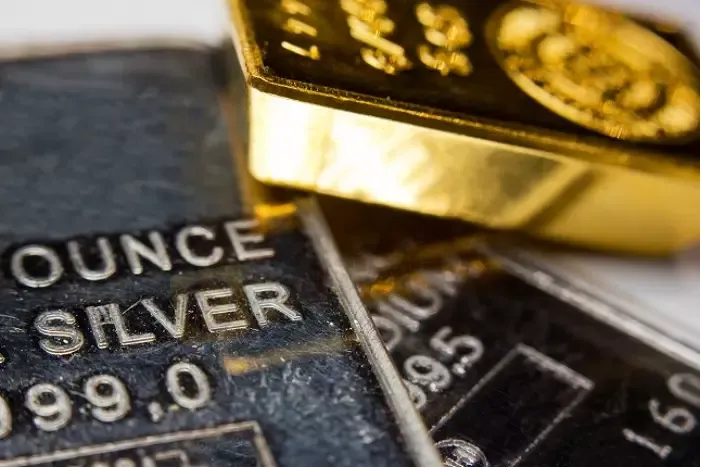
Gold prices and silver prices generally trade in tandem. Their price movements are correlated with one another most of the time, but on occasion, the relationship breaks down providing an opportunity to trade these commodities. One of the best trading strategies is a long-short or pair trading technique where you purchase on asset and simultaneously sell the other. The goal is to generate returns from the outperformance of gold relative silver or vice versa.
When Does the Relationship Break Down?
Both gold and silver prices are inversely correlated to the value of the US dollar most of the time. Since both commodities are priced in dollar, a stronger dollar makes each less attractive to investors who have a base currency that is not the US dollar. Gold is viewed by many as a currency in its own, and during periods when there is a geopolitical unrest, traders flock to the yellow metal for protection.
Using a Mean Reversion Trading Strategy
One of the most productive pair trading strategies is a mean reversion trading strategy. This type of strategy is based on the notion that gold and silver are correlated with one another and their movements occasionally break down. The goal of the strategy is to track the changes in prices and when the movements break out to the edges of the historical range, you would purchase gold (or silver) and sell silver (or gold).
Using Bollinger Bands for Mean Reversion
The most efficient technical indicator for this strategy is Bollinger bands. Bollinger bands were introduced by John Bollinger and are generally a staple in technical analysis education and can be found as part of most technical analysis toolkits.
Bollinger bands calculate a moving average of the asset that it is evaluating. In this case, it would be the ratio of gold prices divided by silver prices (although you could also divide silver prices by gold prices). The default moving average that was introduced with John Bollingers initial findings was the 20-day moving average. When you are attempting to find a technical strategy using Bollinger bands, you should feel free to try many different moving averages.
To capture most of the prices or ratios during the past 20-days, Bollinger uses a 2-standard deviation range around the 20-day moving average. Two standard deviations capture approximately 95% of all the prices within the 20-day range. If you want to capture a larger range, you can handle this in several ways – you can increase the number of days to a larger number or increase the standard deviation or alternatively, you can decrease the range you capture by reducing the number of days or the standard deviation. You can also change the periods used in the calculation by increasing it from daily to weekly which will provide you with a broader picture of the ratio of gold to silver, or you could reduce it from daily to hourly which focuses in on the most immediate price action. You can also use a view of all-three which can help you see a long-term trend and a short-term range.

The chart of the ratio of gold prices divided by silver shows that prices fluctuate in a range. The Bollinger bands encapsulate most of the 20-day period. When the ratio of gold to silver touches the Bollinger band low, you purchase gold and sell silver. When the ratio of gold to silver touches the Bollinger band high, you sell gold and purchase silver. You can take profits when the price moves to the other end of the range or back to the moving average.
You can also add in an oscillator like the fast stochastic to help you determine if the ratio is over-extended. The fast stochastic is a momentum oscillator that measures accelerating and decelerating momentum as well as sentiment. When the fast stochastic reaches a reading above 80, the sentiment is too high, and the ratio is overbought. When the fast-stochastic hits a reading of 20, the sentiment is too low, and the ratio is considered oversold. You can use the fast stochastic as a stand-alone indicator to trade the gold versus silver ratio, or you can use it in conjunction with the Bollinger bands.
For example, you can look for a period when the ratio is above the Bollinger band high, and the fast stochastic is overbought. You might even want to wait until the fast-stochastic declines back below the oversold trigger level of 80, and then place your trade.

If you want to evaluate a longer period, you can also look at a weekly ratio and use this as your trigger or your guide. The trigger would work like the daily trigger (selling the ratio above the Bollinger band high and buying the ratio below the Bollinger band low). If you want to see the broader trend the weekly is a broader view than the daily. You might consider only using the daily trigger (the ratio is either above the Bollinger high or below the Bollinger low) when the weekly ratio is overextended.
Risk Management
Lastly, its imperative that you use a sound risk management strategy. A situation can occur when the ratio trends, and you want to make sure you do not decide that you are going to wait it out. Determine in advance how much you will risk on every trade and use that figure to stop yourself out of a position. The use of Bollinger bands and the Fast Stochastic as tools to determine if the ratio of gold to silver is overextended can help you generate a robust trading strategy that will have consistent returns.
In Conclusion
The Gold-Silver ratio can be used as an effective trading tool as it provides opportunities to trade each commodity separately as well as the gold-silver ratio itself. Practice the gold-silver ratio as a sentiment tool can help traders to feel the market and take advantage of irregular changes in prices. It is also important to find a broker that can provide you with fast execution and low spreads to apply the Gold-Silver strategies.